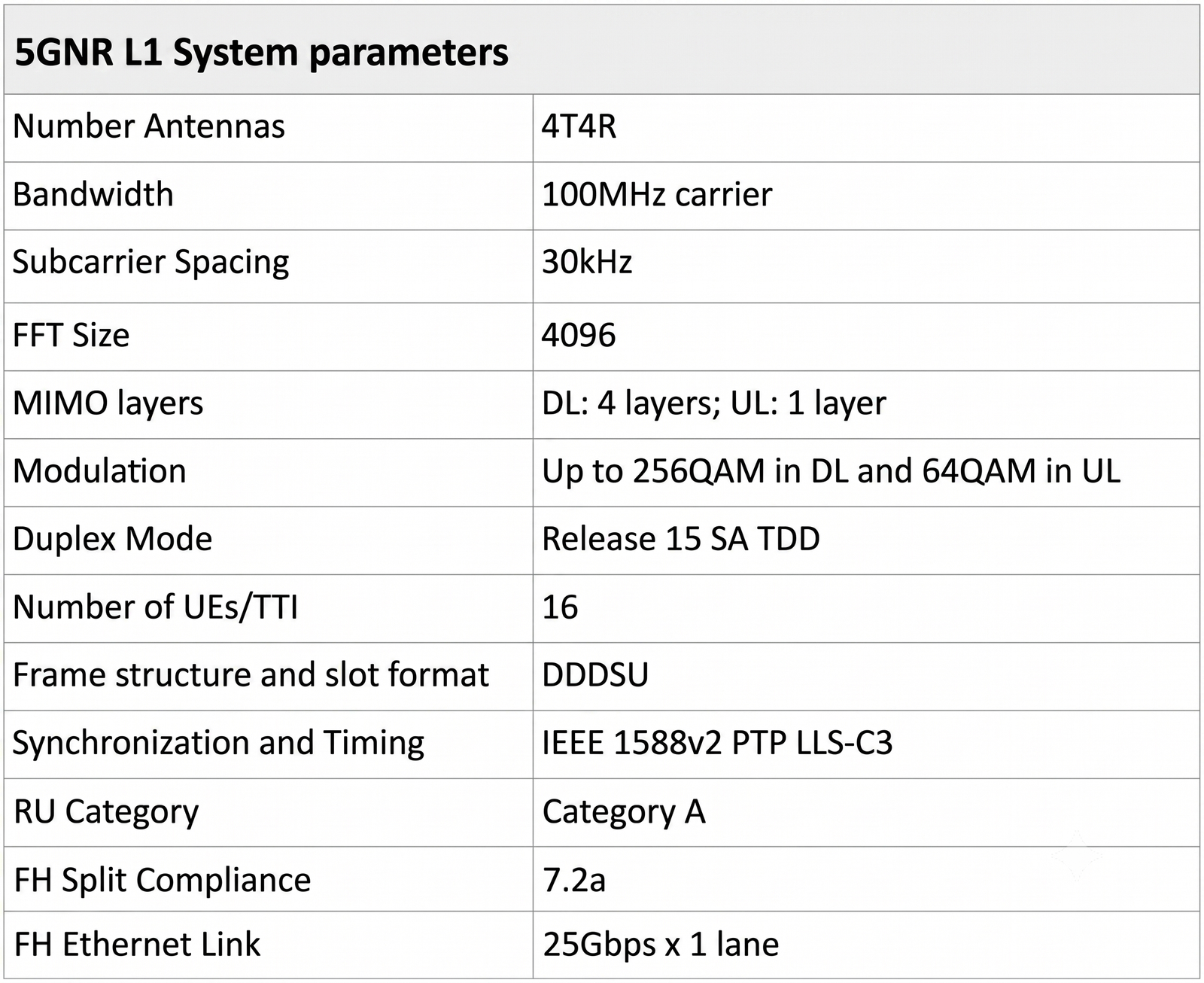
TruRanX builds a 5G NR PHY native to both Arm and x86 — GPU-accelerated, engineered to run on commercial off-the-shelf hardware for terrestrial private networks and satellite deployments alike.
Production-grade Layer 1 for gNB and UE, built natively for both Arm and x86 — not ported between them — with an open look-aside interface for FEC on GPU, FPGA, or ASIC.
O-RAN 7.2a fronthaul, FAPI-over-DPDK L1–L2 interfaces, and full-stack integration with open-source L2/L3.
Physical and protocol-layer expertise for moving-platform radio — aircraft today, satellites next.
Purpose-built instruments, like our 5G PHY Rx Inspector, for real-time visibility into a live RAN stack.
A complete L1 + L2 + L3 gNB stack, running end to end on Arm Ampere + NVIDIA L4, tested against a commercial UE.
Runs across a wide range of hardware price points — from a desktop gaming PC with GPU to industrial server-class platforms.
Our LDPC decoder is included in Arm's official RAN Acceleration Library (RAL).
No proprietary silicon, no vendor lock-in.
The UE LTE physical layer and protocol stack we built for SmartSky Networks (now Apcela) is commercialized — flying in a live network today, not sitting in a demo.
The same software stack runs on an embedded Arm platform, a desktop gaming PC, or a multi-sector production server.
A small, agile team with specialist depth across PHY layer processing, L2, and L3 development, and end-to-end commercial deployment experience.
"We took a stalled air-to-ground physical layer to commercial deployment in under a year. That discipline shapes everything we build."
TruRanX is a wireless technology company built around one discipline: physical layer engineering that survives contact with the real world, not just a lab bench.
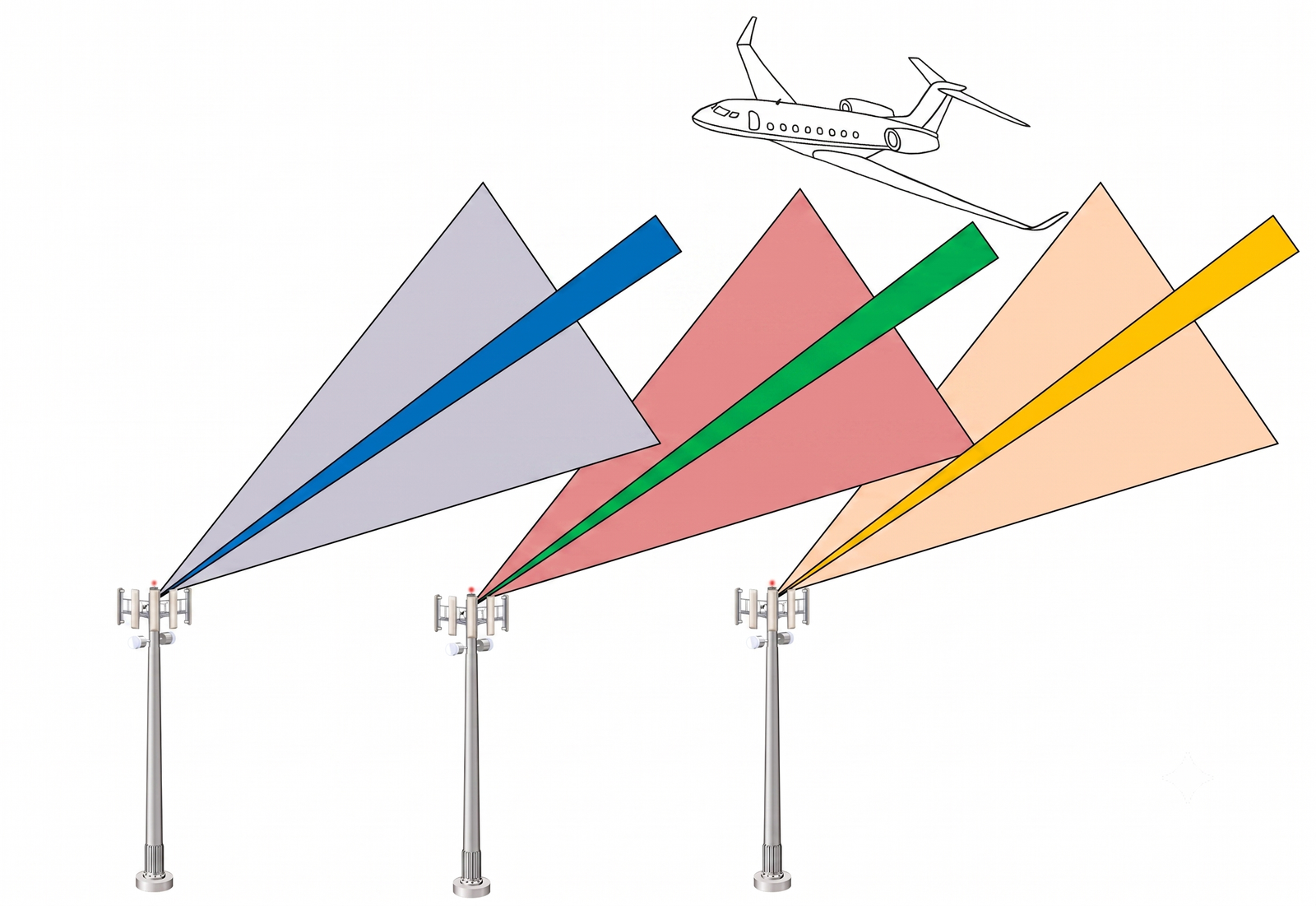
Our formative project was building the LTE UE physical layer — and hardening the Layer 2/3 protocol stack — for an air-to-ground (ATG) network for SmartSky Networks. The link had to hold synchronization from a business jet at cruise, across cells spanning hundreds of miles, through constant handovers, in spectrum shared with uncoordinated Wi-Fi traffic. That network — later acquired and relaunched as Apcela ATG — is flying today.
That experience shaped how we've built every physical layer since: native to both Arm and x86 — with the Arm-native build carrying the power-efficiency discipline that satellite payloads demand — software-defined so the accelerator is a deployment decision rather than an architectural commitment.
Our mission: one carrier-grade 5G RAN software stack, native to Arm and x86, serving both terrestrial private networks and satellite programs — without trading performance for silicon lock-in.
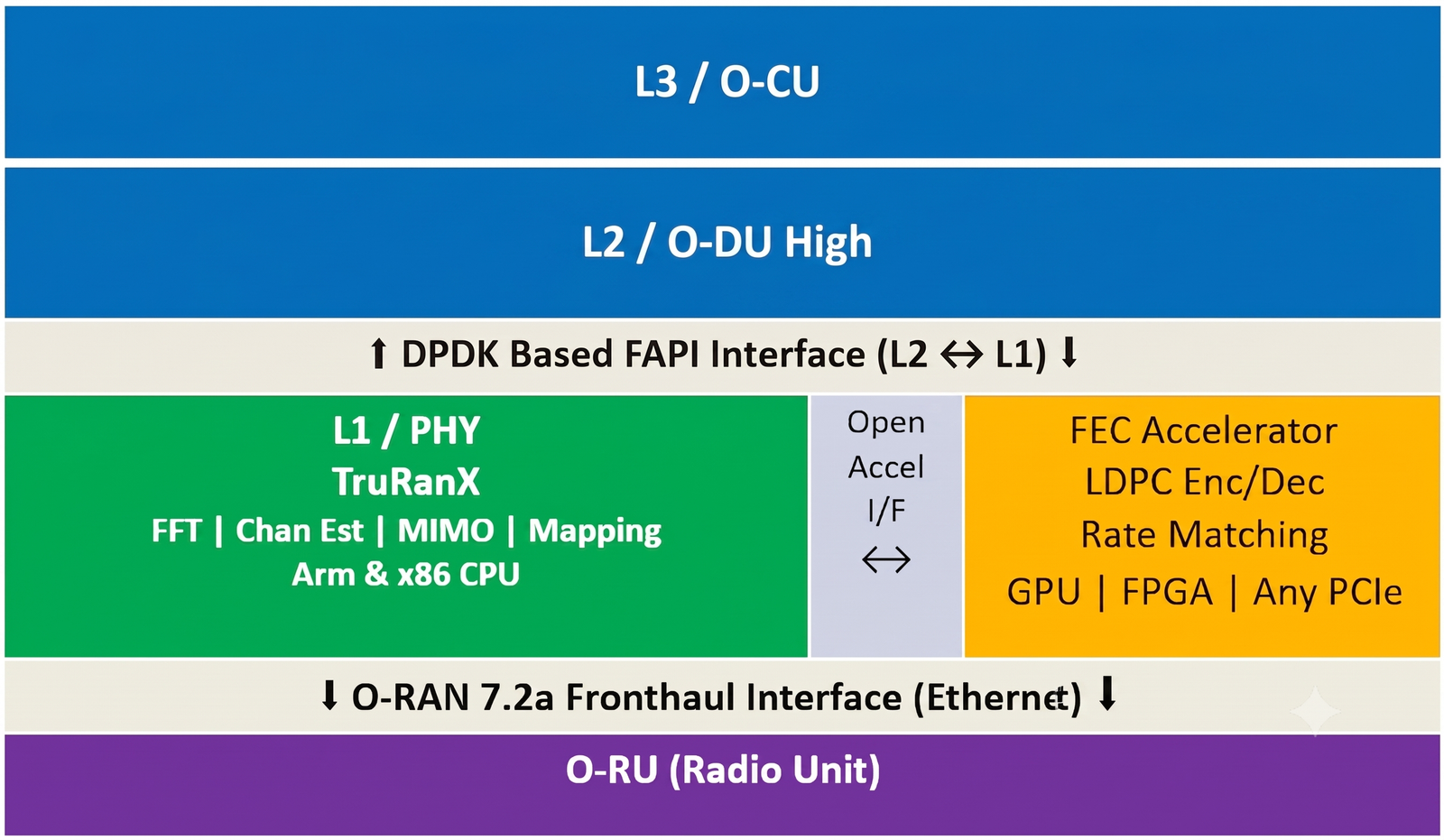
Our 5G NR PHY isn't ported between architectures — it's built natively for both Arm and x86. The native Arm build is what makes it satellite-friendly, where every watt is a payload constraint. The native x86 build — including desktop AMD chips using AVX-512 — puts the same performance on the COTS hardware terrestrial operators already run.
General-purpose cores, Arm or x86, handle the control-heavy, lower-density baseband tasks and lightweight L1 processing.
LDPC forward error correction and bit-level processing — the most data-parallel work — offload to a GPU, currently NVIDIA L4.
FEC sits behind a look-aside interface that also supports FPGA or ASIC — the accelerator is a per-deployment choice.
Radio and L2/MAC communication runs over DPDK, avoiding memcpy overhead and kernel intervention.
Our Layer 1 is FAPI-compliant and connects to Layer 2/3 over DPDK. We've integrated it end to end with open-source L2/L3 stack, into a complete Open RAN gNodeB — tested against a commercial Qualcomm 5G NR UE on Band n78.
| Hardware Configuration | |
|---|---|
| Arm-Native — Satellite & Power-Constrained Deployments | |
| Embedded Armv9 SoC + GPU | e.g., CIX P1 class — DSP-competitive price point (~<$700), built for edge and SWaP-constrained deployments |
| Arm Ampere / AGI Server + NVIDIA L4 | Production-grade multi-cell setup on server-class hardware |
| Share Same GPU or Add Extra GPU | Unlocks dedicated AI-RAN inference acceleration capacity |
| x86-Native — Terrestrial COTS Deployments | |
| Server-Class x86 + GPU | Production-grade multi-cell deployment on infrastructure operators already run |
| Desktop-Class AMD (AVX-512) + GPU | A lower-cost x86 entry point for private-network and lab deployments, paired with a server-class NVIDIA L4 GPU or a consumer RTX gaming GPU |
Because FEC acceleration runs on a GPU rather than consuming the entire compute budget, the same hardware that runs our PHY has headroom left for low-latency AI-RAN inference at the edge — without a separate accelerator.
Standards-compliant, disaggregated RAN software for operators and enterprises who want performance without hardware lock-in. The native x86 build, including desktop-class AMD with AVX-512, means the PHY runs on compute infrastructure many terrestrial operators already have on hand.
Our physical layer was forged on a moving platform — large cells, high Doppler, continuous timing drift, relentless handover, all in uncoordinated spectrum. Those are the same problems, at greater magnitude, that define satellite NR. For regenerative payloads, our native Arm implementation targets the constraint that matters most in orbit: performance per watt.
GPU headroom on our DU platforms opens a path to running AI-driven network optimization workloads at the edge, alongside the PHY itself.
An engineering analysis connecting our commercial air-to-ground deployment to the design requirements of a satellite-borne gNB.
Our Arm/NVIDIA L4-accelerated physical layer paired with Layer 2/3, tested end to end against a commercial UE.
Arm Ampere + NVIDIA L4 COTS hardware, validated at 256-QAM downlink / 64-QAM uplink with industry-standard test equipment. Introduced the 5G PHY Rx Inspector.
Deep dive into production-grade 5G NR Layer 1 software architecture, CPU-first baseband processing, and look-aside acceleration on COTS platforms.
Demonstrated 256-QAM downlink / 64-QAM uplink PHY processing on Pegatron PG1250 O-RU over Arm Ampere + NVIDIA L4 COTS server platforms, and unveiled our real-time 5G PHY Rx Inspector diagnostic instrument.
Our Arm/NVIDIA L4 GPU-accelerated 5G NR physical layer paired end-to-end with Layer 2/3 stack, validated with off-the-shelf commercial Qualcomm 5G NR UEs on Band n78.
Published a comprehensive engineering analysis connecting our commercial air-to-ground deployment experience with SmartSky Networks to the design constraints of a satellite-borne regenerative 5G gNodeB.
Leads physical layer and RAN architecture at TruRanX. His team took a stalled air-to-ground physical layer to commercial deployment with SmartSky Networks, and has since built the company's Arm- and x86-native, accelerator-agnostic 5G NR PHY from the ground up.
Raman holds a master's degree in Digital Communication Engineering from Christian-Albrechts-Universität zu Kiel, Germany, and brings 20 years of experience in wireless communication system development and business development. A hands-on engineer at his core, he has a deep understanding of RAN technologies.